
Last Updated: November 26, 2026
Quick Summary
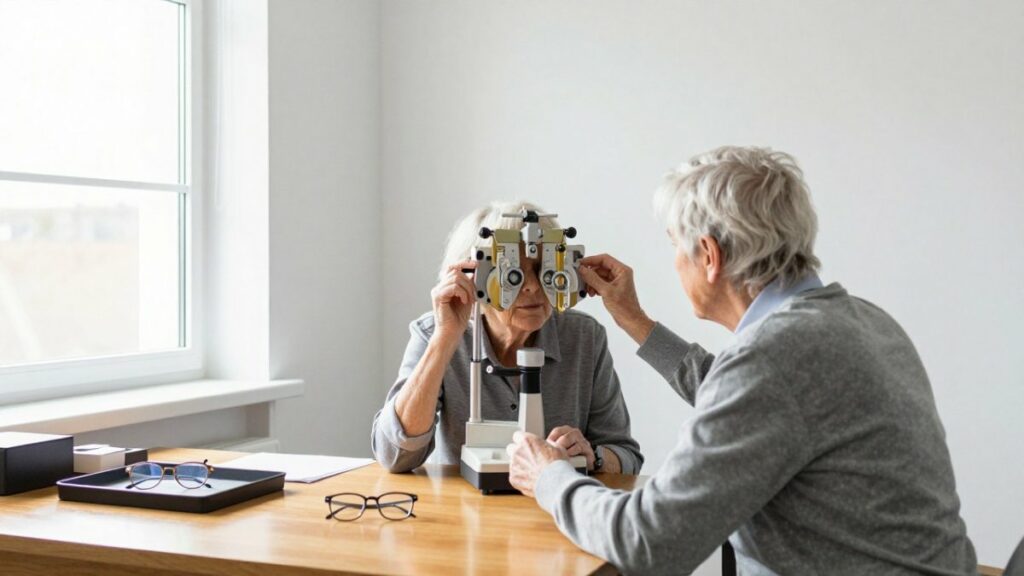
Choosing an eye doctor for senior care means finding an optometrist who combines thorough disease screening with unhurried, patient-centered exams. Confirm the practice offers comprehensive eye exams, dilated retinal exams, and experience with age-related eye disease. Many optometrists recommend an annual eye exam for adults aged 65 and older.
- A senior eye exam covers case history, visual acuity, eye pressure, a dilated retinal exam, and OCT scans.
- Glaucoma screening for seniors matters because the condition develops slowly and often without warning signs.
- Cataract symptoms in seniors include blurred vision, glare from headlights, faded colors, and difficulty reading in low light.
- Low vision support for seniors includes magnifiers, lighting adjustments, larger-print materials, and fall-prevention strategies.
- Alcona Eye Care offers multilingual service in English, Spanish, French, Portuguese, and Italian, with free parking at Crossroads Plaza.
Table of Contents
- How Do You Choose an Eye Doctor for Senior Care?
- What Senior Eye Exams and Glaucoma Screening for Seniors Involve
- Recognizing Cataract Symptoms in Seniors and Finding Low Vision Support for Seniors
- Frequently Asked Questions
How Do You Choose an Eye Doctor for Senior Care?
Choosing an eye doctor for senior care means finding an optometrist who combines thorough disease screening with unhurried, patient-centered exams. When comparing practices, confirm they offer comprehensive eye exams, dilated retinal exams, and experience with age-related eye disease. (Source: OHIP coverage for seniors)

For adult and senior exams, learn more about eye exams at Alcona Eye Care Centre. Our team also explains OHIP coverage for seniors’ eyeglasses.
| Provider Type | Best For | What to Ask |
|---|---|---|
| Optometrist | Routine exams, screening, prescriptions | Do you offer dilated exams and OCT scans? |
| Ophthalmologist | Surgery and complex disease | How long is the referral wait? |
| Geriatric-focused practice | Complex needs, mobility limits | Is the space accessible? |
What Senior Eye Exams and Glaucoma Screening for Seniors Involve
A senior eye exam covers case history, visual acuity, eye pressure, a dilated retinal exam, and OCT scans. Glaucoma screening for seniors matters because the condition develops slowly and often without warning signs. Our practice offers eye disease diagnosis and management, and we have a fuller guide to glaucoma screening for seniors. (Source: Canadian Ophthalmological Society guidelines)
How often should seniors have an eye exam? Many optometrists recommend an annual eye exam for adults aged 65 and older, though your interval depends on your eye health and risk factors.
Recognizing Cataract Symptoms in Seniors and Finding Low Vision Support for Seniors
Cataract symptoms in seniors usually appear gradually: blurred vision, glare from headlights, faded colors, and difficulty reading in low light. Low vision support for seniors picks up where glasses stop helping: magnifiers, lighting adjustments, larger-print materials, and fall-prevention strategies. Sudden vision loss, a curtain over part of your vision, new flashes or floaters, or eye pain need prompt attention. Cataract symptoms overlap with other age-related eye conditions, so it helps to know the macular degeneration symptoms you shouldn’t ignore.
Finding the right eye doctor for senior care comes down to one question: does this practice treat older adults as people with specific needs? Alcona Eye Care offers comprehensive senior eye exams, glaucoma screening, and ongoing management of age-related eye disease, with multilingual service in English, Spanish, French, Portuguese, and Italian, an inclusive space, and free parking at Crossroads Plaza. Book an appointment with Alcona Eye Care for a clear, unhurried plan.
Frequently Asked Questions
How often should seniors have an eye exam?
Most adults aged 65 and older should have a comprehensive eye exam every one to two years, though your optometrist may recommend more frequent visits if you have a condition like glaucoma, diabetes, or age-related macular degeneration. Regular senior eye care helps detect changes early, when treatment is most effective. Ask your eye-care professional to set a schedule that matches your individual risk factors and health history.
Are senior eye exams covered in Ontario?
Ontario residents aged 65 and older may be eligible for a publicly funded routine eye exam through OHIP. Eligibility and coverage intervals can change, so confirm the current details with the official source or ask the clinic when you book.
When should an older adult see an optometrist instead of an ophthalmologist?
An optometrist handles routine eye exams, prescriptions, glaucoma screening, and monitoring of many age-related conditions. An ophthalmologist is a medical doctor who performs surgery and manages complex disease. For most seniors, an optometrist is the first point of contact and will refer you to an ophthalmologist if surgery or specialized treatment is needed. Choosing the right eye-care professional starts with a comprehensive exam.