Last Updated: November 15, 2026
Quick Summary
Choose an Innisfil optometrist for families by confirming the clinic sees every age group, offers comprehensive eye exams rather than quick vision screenings, and can care for your whole household in one place. At Alcona Eye Care, we built our practice around those three answers.
- A family optometrist should handle toddlers, teenagers, parents and grandparents under one roof.
- Children’s exams rely on observation and specialized tests, since a child often cannot explain what is wrong.
- Before your visit, write down symptoms, medications, family eye disease history and coverage questions.
- Bring sunglasses to the appointment, since some tests dilate your pupils.
- Check whether your child’s or senior’s exam is covered under provincial health coverage before booking.
Table of Contents
- How to Choose an Optometrist for Your Family in Innisfil
- Eye Exams for Children and What a Comprehensive Eye Exam Covers
- Eye Exam Appointment Tips and Booking Your Family Visit
- Frequently Asked Questions
How to Choose an Optometrist for Your Family in Innisfil
Finding an Innisfil optometrist for families starts with three questions: does the clinic see every age group, does it offer comprehensive eye exams rather than quick vision screenings, and can it see your whole household without sending you across town. At Alcona Eye Care, we built our practice around those three answers.
What to Look for in a Family Optometrist
A family optometrist should handle a toddler’s first exam, a teenager’s contact lens fitting, a parent’s digital eye strain, and a grandparent’s glaucoma monitoring under one roof.
How to Compare Local Clinics
| What to Check | Why It Matters | Score (1-5) |
|---|---|---|
| Sees all ages, including young children | One clinic for the whole family | |
| Offers comprehensive eye exams | Catches health issues, not just blur | |
| Specialty services (dry eye, myopia control) | Ongoing care under one roof |
Eye Exams for Children and What a Comprehensive Eye Exam Covers
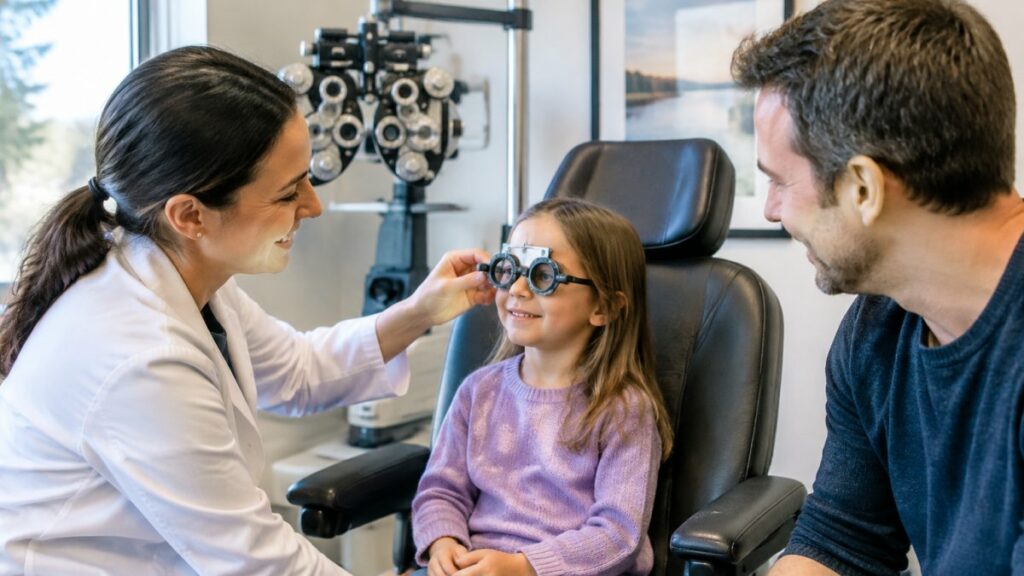
Children’s eye exams differ from adult exams because a child often cannot tell you what is wrong, so pediatric eye care relies on observation, specialized tests, and a patient optometrist who can keep a young child engaged.
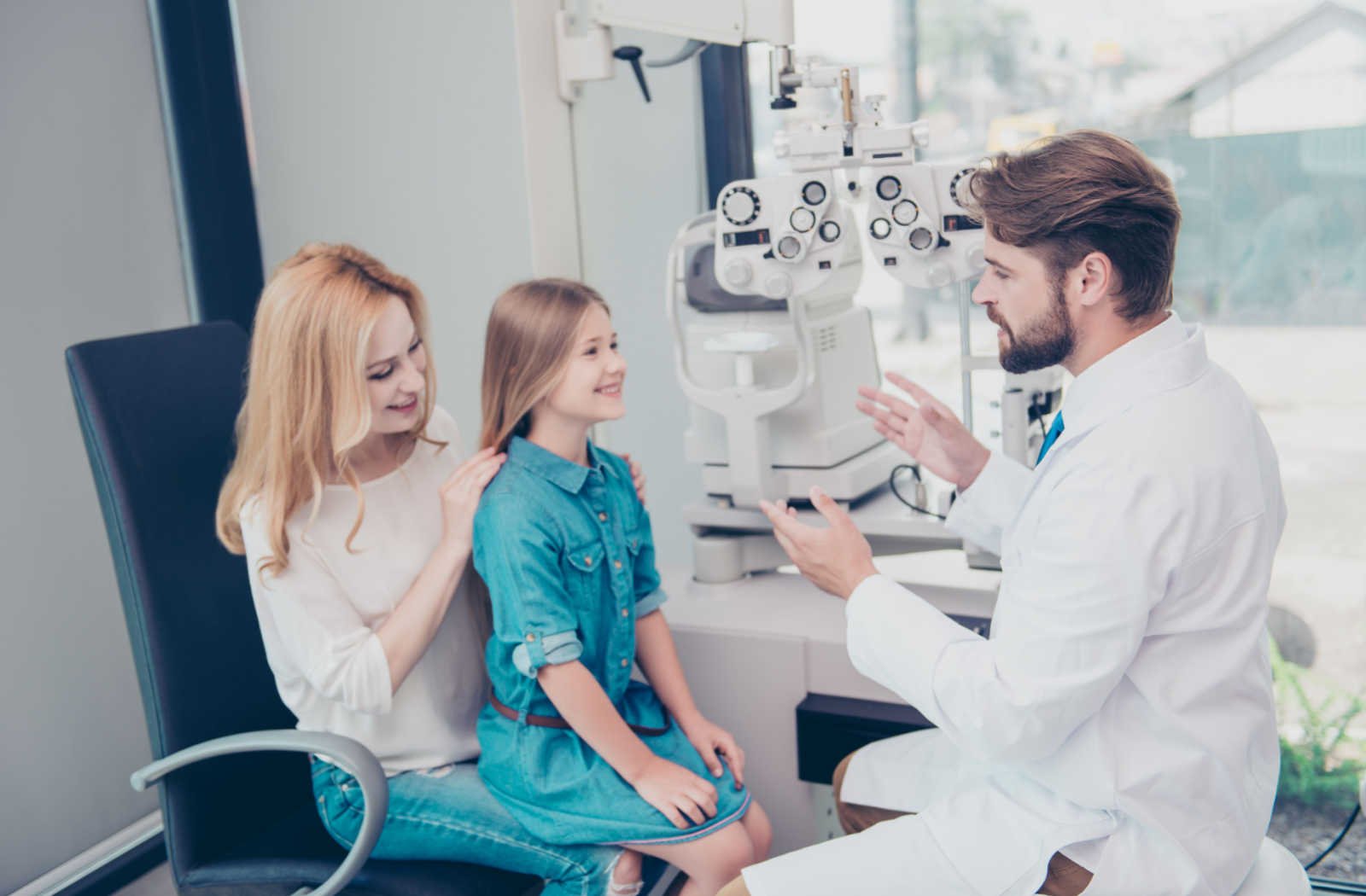
A comprehensive eye exam is a full assessment of vision and eye health, not just a check of how well you read a chart. For children, the optometrist also watches how the child tracks objects, holds a book, and uses both eyes together, observations that catch problems a simple screening misses.
Parents often ask when to book a first exam. Your optometrist can recommend a schedule based on your child’s vision and risk factors. Canadian Association of Optometrists guidance on children’s vision sets out general age guidelines you can review before your visit.
For a dedicated appointment, learn more about children’s eye exams in Innisfil, read what to expect at a kid’s eye exam, and see what a comprehensive eye exam involves.
Note that a school vision screening is different from a comprehensive eye exam, which assesses vision and eye health more fully.
Eye Exam Appointment Tips and Booking Your Family Visit
Before the appointment: write down symptoms, list medications and family history of eye disease, gather glasses or contact lens details, and ask about coverage.
On the day:
- Arrive early to complete paperwork without rushing
- Bring sunglasses, since some tests dilate your pupils
- Bring a list of questions and ask them
Coverage and cost: Eye exams for children and seniors are handled differently from adult exams under provincial health coverage. Ontario Ministry of Health information on OHIP-insured eye care explains which exams are covered and which are not. Many employers also offer vision care through private insurance, so check your plan before booking. For current fees, contact the clinic directly.
How often to book: Frequency depends on age, health, and risk factors. Canadian Association of Optometrists eye exam frequency guidelines outlines general recommendations by age group. Our own guide on how often you should get an eye exam breaks this down further.
To schedule your family visit, see our location in Innisfil for address and booking details.
Your family’s eye health deserves more than a rushed ten-minute check. Alcona Eye Care offers comprehensive eye exams for every age, multilingual service in English, Spanish, French, Portuguese, and Italian, and specialty care for dry eye and myopia control, all in a welcoming space with free parking. Get started with Alcona Eye Care and book a visit that gives your whole family clear, confident vision.
Frequently Asked Questions
How do I choose an optometrist for my family?
Look for a clinic that offers comprehensive eye exams for every age, from children’s eye exams to senior vision care. Check whether the optometrists are licensed, whether the practice handles pediatric eye care and myopia management, and whether appointment times work for your schedule. A family eye care practice should also explain coverage clearly and make scheduling easy. Visiting the local clinic in person or reading patient reviews can help you judge whether the team feels welcoming.
How can I prepare my child for an eye exam?
Talk about the visit in simple, positive terms a few days ahead so it feels routine rather than scary. Explain that the optometrist will ask them to look at pictures and letters, and that nothing hurts. Bring their current glasses or contact lenses if they wear them, plus a list of any vision concerns from school or home. Booking a time when your child is rested helps too. Let the clinic know it is their first eye exam so the eye care team can allow extra time.
What happens during a comprehensive eye exam?
A comprehensive eye exam checks more than how well you see. The optometrist reviews your health history and vision needs, tests visual acuity and eye coordination, and examines the health of your eyes, including the retina and pressure inside the eye. Children’s eye exams may include extra checks for focusing and eye alignment. The optometrist can explain results and next steps, including whether eyewear or a follow-up appointment is needed.