Last Updated: November 4, 2026
Quick Summary
The best dry eye treatment starts with identifying your subtype, because evaporative dry eye from meibomian gland dysfunction needs eyelid hygiene and lipid support, while aqueous-deficient dry eye calls for preservative-free artificial tears and topical therapy. Prescription drops target inflammation, and in-office therapy addresses glands that drops alone can’t fix.
- Evaporative dry eye usually points to meibomian gland dysfunction, where the oil layer of your tear film breaks down.
- Prescription topical options for dry eye often take weeks to show full effect, so consistent use matters.
- The 20-20-20 rule means every 20 minutes, look at a distance of 20 feet for 20 seconds.
- Keep humidity above 30% in heated rooms and wear wraparound glasses outdoors in wind.
- Alcona Eye Care offers services in English, Spanish, French, Portuguese, and Italian.
Table of Contents
- How Dry Eye Subtypes Shape Your Treatment Plan
- Prescription Eye Drops for Dry Eyes and In-Office Dry Eye Therapy
- Lifestyle Changes for Dry Eye Relief That Support Clinical Care
- Building a Dry Eye Treatment Plan at Alcona Eye Care
- Frequently Asked Questions
How Dry Eye Subtypes Shape Your Treatment Plan
Finding the best dry eye treatment options in 2026 starts with one question most people skip: which kind of dry eye do you have? Many people buy drops for months without knowing whether their tears evaporate too fast or their eyes simply don’t make enough.
These are two different problems. Evaporative dry eye usually points to meibomian gland dysfunction, where the oil layer of your tear film breaks down. Aqueous-deficient dry eye means your glands underproduce the watery part. Treatment for one rarely fixes the other.
| Subtype |
| — | — | — |
| Evaporative | Meibomian gland dysfunction, blepharitis | Eyelid hygiene, pulsed heat, lipid support |
| Aqueous-deficient | Low tear production, inflammation | Preservative-free artificial tears, topical therapy |
| Mixed | Both mechanisms at once | Combined regimen, in-office therapy |
| Contact lens-related | Lens wear disrupting the tear film | Refit, specialty lenses, lubricants |
Morning dryness is its own clue and worth exploring in more depth, as our guide on why your eyes are dry when you wake up explains. If you wear contacts and suspect they’re the culprit, read about whether contacts dry your eyes out.
Prescription Eye Drops for Dry Eyes and In-Office Dry Eye Therapy
Prescription eye drops for dry eyes target chronic inflammation directly, while in-office dry eye therapy addresses the glands and tear film that drops alone can’t fix. Prescription topical options for dry eye often take weeks to show full effect, and consistent use matters. Your optometrist can advise which option, if any, suits your condition.
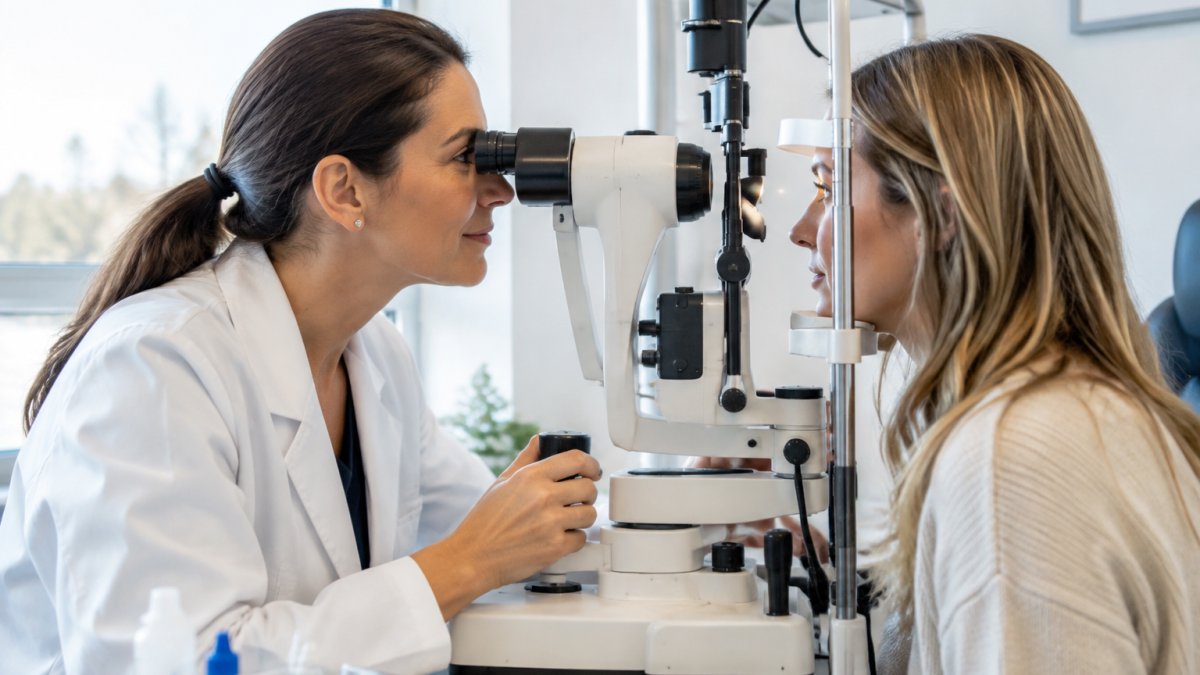
Some optometrists offer in-office options for dry eye, and your optometrist can advise whether any of them suit your condition. Preservative-free formulations are one option to discuss if you use drops frequently, since preservatives can irritate an inflamed surface.
A common mistake is stopping a prescription after two weeks because it “isn’t working.” Topical therapy for ocular surface disease needs a proper trial. Ask your optometrist what a realistic timeline looks like before you judge results.
Lifestyle Changes for Dry Eye Relief That Support Clinical Care
Lifestyle changes for dry eye relief work best as support, not replacement. Blink breaks, humidifiers, and omega-3 fatty acids may ease symptoms, but they will not reverse gland damage on their own.
Screen time is the biggest lever for most office workers. The 20-20-20 rule helps: every 20 minutes, look at a distance of 20 feet for 20 seconds. Our guide to digital eye strain covers positioning and screen settings in more detail. If you want supplement guidance, see our breakdown of vitamins for dry eye.
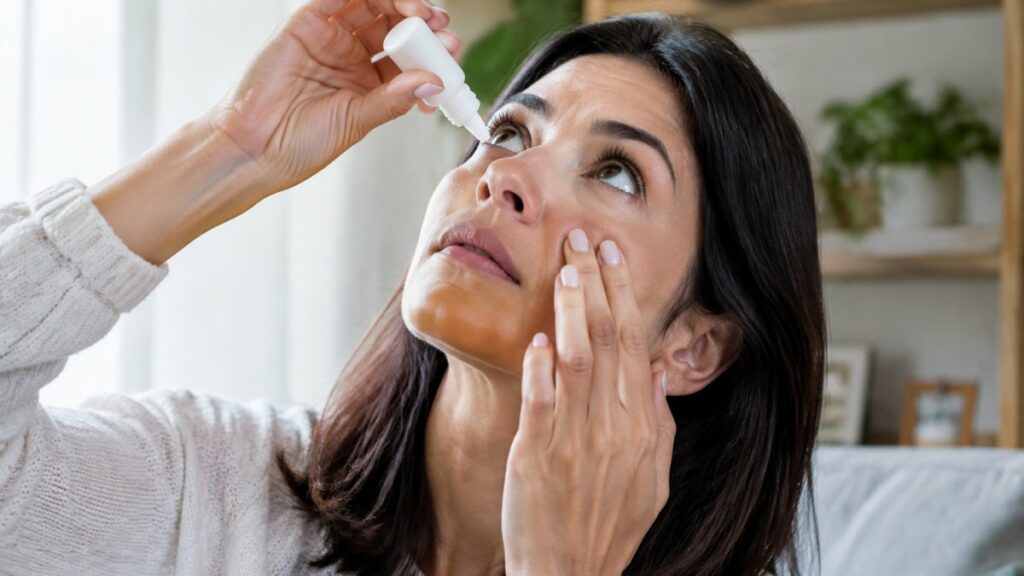
Frequent use of drops containing preservatives can irritate the eye surface over time, so discuss preservative-free options with your optometrist if you dose often.
Other habits that help:
- Keep humidity above 30% in heated rooms
- Wear wraparound glasses outdoors in wind
- Limit alcohol and stay hydrated
- Use warm compresses as part of eyelid hygiene
Building a Dry Eye Treatment Plan at Alcona Eye Care
A treatment plan should match your subtype, your symptoms, and your daily routine. That’s the difference between guessing and managing. An eye care professional can assess your tear film, eyelids, and corneal health, then recommend a plan based on those findings.
Our team offers multilingual services in English, Spanish, French, Portuguese, and Italian, so you can ask questions in the language you are most comfortable with.
If you’ve tried drops and compresses without lasting relief, book a dry eye treatment consultation to get a plan built for your eyes. A consultation can review your history and check for conditions such as meibomian gland dysfunction and blepharitis.
Frequently Asked Questions
What is the most effective dry eye treatment in 2026?
There is no single best dry eye treatment because effectiveness depends on your dry eye subtype. Evaporative dry eye, often linked to meibomian gland dysfunction, may respond to eyelid hygiene, pulsed heat, and lipid-based drops. Aqueous-deficient dry eye may need preservative-free artificial tears or prescription eye drops for dry eyes. In-office dry eye therapy can address chronic inflammation and tear film instability when at-home care is not enough. An optometrist can assess your tear osmolarity and corneal staining to build a plan that fits your eyes.
Are there new prescription eye drops for dry eyes?
Prescription eye drops for dry eyes have expanded beyond basic lubrication. Some target chronic inflammation on the ocular surface, while others aim to support tear production. Your optometrist will consider your symptoms, corneal health, and whether you have blepharitis or meibomian gland dysfunction before recommending a topical therapy. Because these drops affect the ocular surface, they require professional monitoring. Ask during your exam whether a prescription option suits your type of dry eye, and never start one without guidance.
Are dry eye treatments covered by provincial health insurance?
Coverage for dry eye treatment varies. Coverage for dry eye treatment depends on your provider and plan, so check with them directly. Many patients use private insurance or pay out of pocket. Because plans and eligibility differ, check with your provider and ask the clinic about current fees before booking.
Chronic dry eye rarely resolves on its own, and guessing at treatments wastes time and money. Alcona Eye Care offers personalized dry eye management, in-office therapy, and ongoing follow-up so your plan adapts as your eyes respond. Get started with Alcona Eye Care and build a treatment plan that targets the cause, not just the symptoms.